28 April 2026
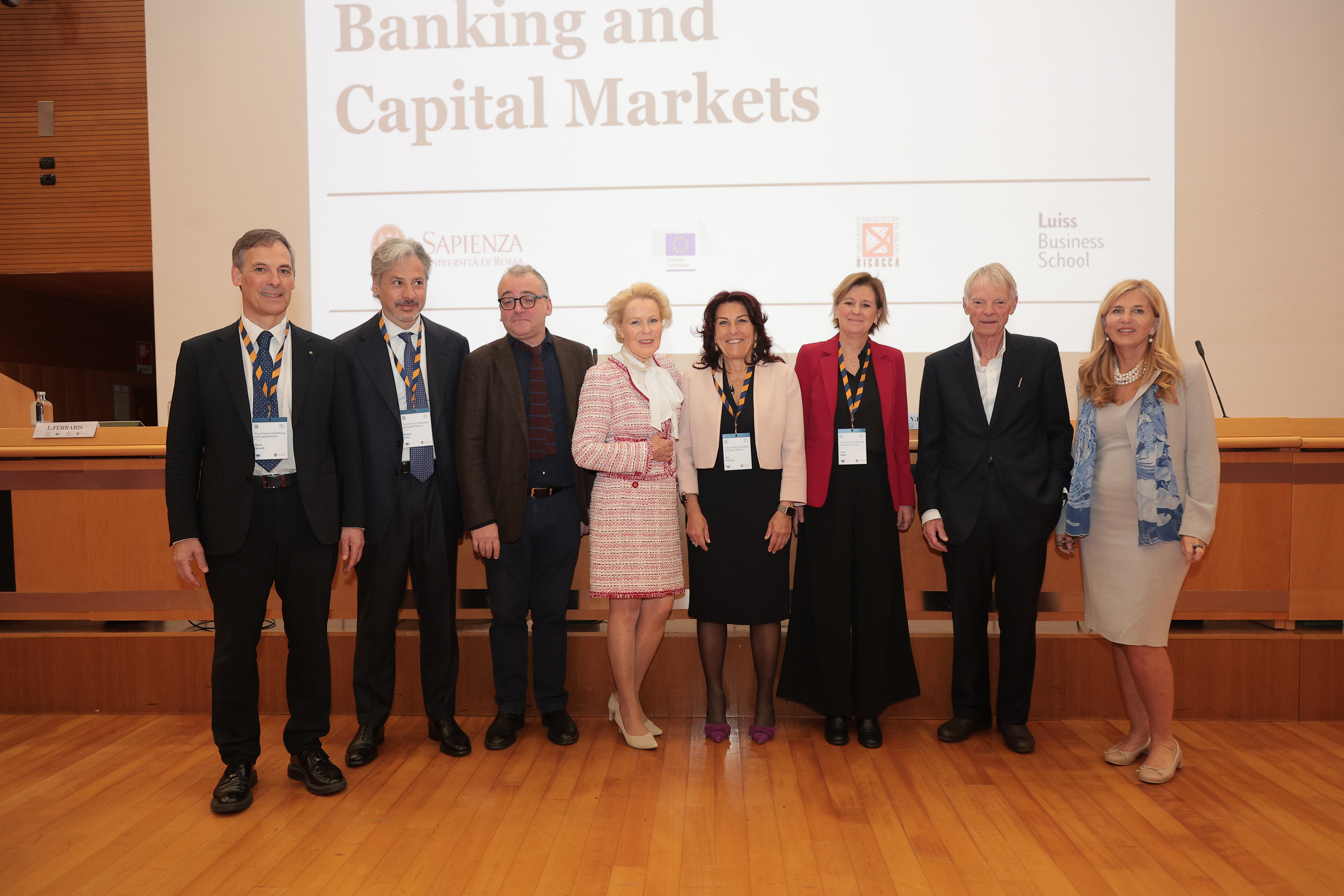
On 16 and 17 April 2026, Milan hosted the 7th edition of the New Frontiers in Banking and Capital Markets (NFBCM) conference, organized by the University of Milano-Bicocca, La Sapienza – Università di Roma, and Luiss Business School. CFA Society Italy took part in the initiative, reaffirming its commitment to fostering dialogue between academic research and professional practice as a key driver for the evolution of the financial industry.
The 2026 edition, titled “The ESG Reset: Rethinking Sustainable Finance in Banking and Capital Markets,” addressed a central question for the industry: how to reassess the tools, methodologies, and frameworks of sustainable finance at a time when credibility and effectiveness are under increasing scrutiny.
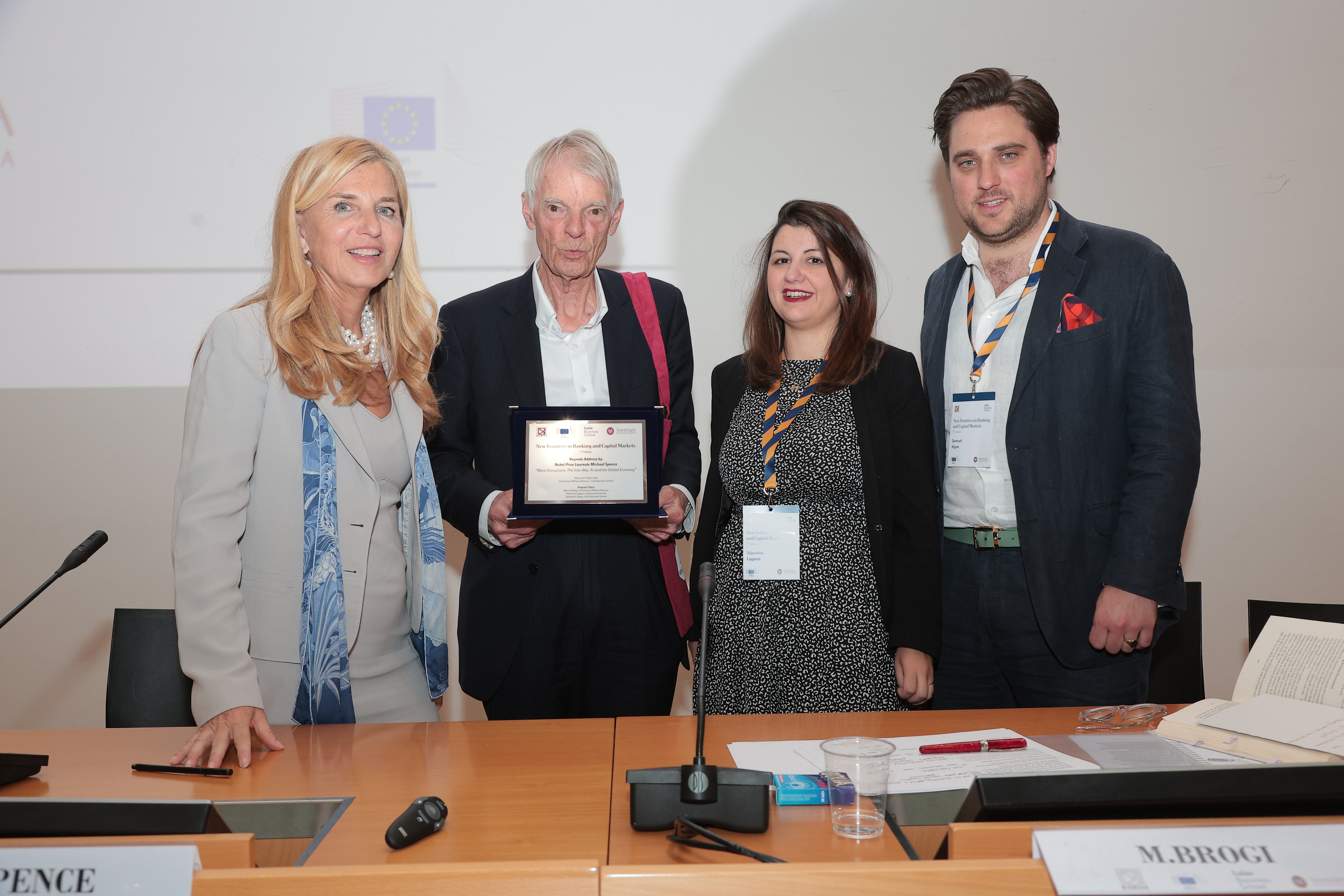
The conference opened with a keynote by Michael Spence, who offered a broad reflection on the structural transformations shaping the global economy, from geopolitical tensions to the rise of artificial intelligence. His contribution framed sustainable finance within a wider context of systemic change, highlighting the need to rethink its role in an increasingly complex environment.
Across the two days, research presentations covered several topics of direct relevance to investment professionals. Discussions on ESG scores confirmed the persistence of significant divergences across rating providers and their implications for capital allocation, pointing to the need for more robust and informative methodologies. Climate and transition risks were analysed from multiple perspectives, including their transmission through production networks, their impact on bank balance sheets and their implications for European sovereign debt. The debate also addressed regulatory developments, with particular attention to proposed revisions to the Corporate Sustainability Reporting Directive (CSRD) and the credibility of sustainability-labelled investment products.
Jonathan Taglialatela, PhD, CFA, a member of CFA Society Italy, participated in the conference as a discussant of the paper “Green Coins”, which explores the role of a green Central Bank and a blockchain-based digital currency to improve capital allocation toward the climate transition.
Among the key messages emerging from the conference was the recognition that ESG measurement frameworks remain insufficiently aligned with market needs, while climate risk is becoming increasingly integrated into credit and sovereign analysis. At the same time, artificial intelligence is gaining relevance both as a tool to enhance ESG data quality and as an enabler of broader access to financial services.
The second day featured a round table on digital inclusion, with the participation of Michael Spence, Leonardo Gambacorta, Head of Emerging Markets at BIS, and Yanan Wu, CEO of Surfin. The discussion focused on how digital technologies can expand access to financial services, highlighting one of the most promising frontiers for a more inclusive financial system.
For the first time, CFA Society Italy has presented an award for the best paper in capital markets at the conference: the call for papers attracted more than 50 submissions from universities, supervisory authorities, and international research centres, reflecting the strong momentum of academic research in this field.
The award was presented to the paper “Scoring in the Transition: A Signalling Model of Corporate Decarbonization” by Giacomo Bezzi, Massimiliano Croce, Rodrigo Fernandez-Fuertes, and Giacomo Gigante. The research addresses a highly relevant question for both academia and industry: how ESG scoring methodologies can be designed to better guide capital allocation during the transition to a low-carbon economy, providing both theoretical insights and empirical evidence.
CFA Society Italy’s participation in NFBCM 2026 represents a concrete step in strengthening its engagement with the academic community, in line with its mission to promote high standards of analysis, ethics and professionalism within the investment industry. The Society also extended its thanks to Professors Marina Brogi, Valentina Lagasio, and Samuel Vigne for organising a conference that continues to stand out for the quality and relevance of its contributions.